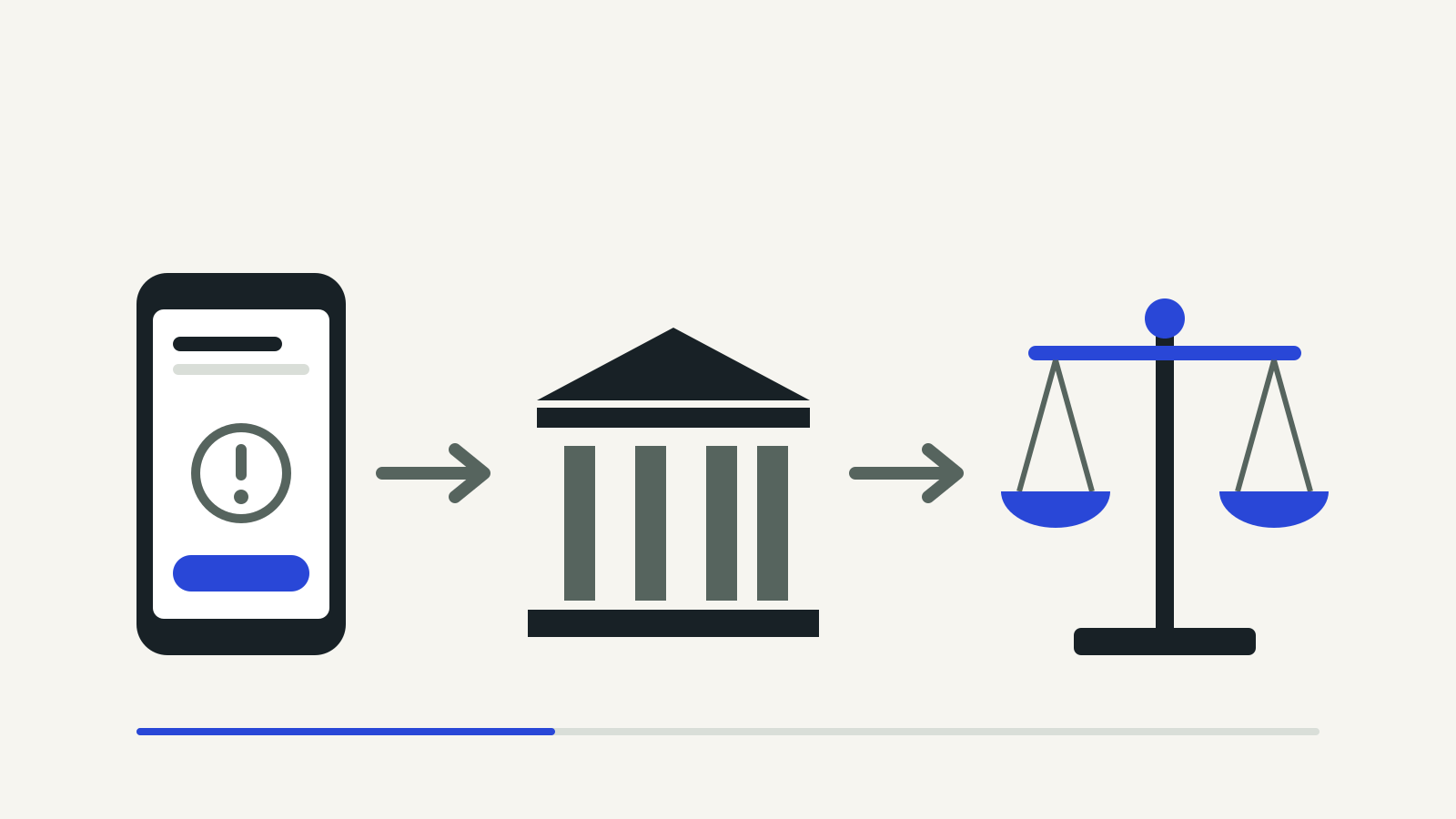
If money left your account on UPI but never reached the other side, or a merchant took payment and did not deliver, a UPI complaint starts with your UPI app or your bank. NPCI, which runs UPI, can log a complaint too, but it passes it to your bank to resolve. If the bank does not reply within the allowed time or you are unhappy with its answer, the RBI Ombudsman is the next step.
That order comes from two sets of rules. NPCI’s UPI Consolidated Circular of 18 September 2026 makes banks and UPI apps responsible for resolving customer complaints. The RBI’s Integrated Ombudsman Scheme, 2026, in force since 1 July 2026, sets out when a complaint can be escalated to the regulator’s ombudsman. Here is how each step works.
Before you complain: failed payments should reverse on their own
A failed UPI payment is meant to be put right without you filing anything. The RBI’s framework on “Harmonisation of Turn Around Time (TAT) and customer compensation for failed transactions using authorised Payment Systems”, issued on 20 September 2019, sets outer limits for UPI:
| What went wrong | Deadline for reversal | Compensation if late |
|---|---|---|
| Your account was debited but the person you paid was not credited | Auto-reversal by the beneficiary bank by T + 1 day | ₹100 per day of delay beyond T + 1 |
| Your account was debited but the merchant did not get confirmation | Auto-reversal within T + 5 days | ₹100 per day of delay beyond T + 5 |
T is the calendar date of the transaction. Source: RBI circular DPSS.CO.PD No.629/02.01.014/2019-20, 20 September 2019.
The RBI says this compensation must be credited to the customer’s account on the bank’s own initiative, without waiting for a complaint or claim. NPCI’s consolidated circular still tells UPI members to follow this framework.
NPCI’s rules also make the system chase pending payments itself. Under section 32 of the circular, UPI automatically asks the remitter or beneficiary bank to check and update the status of pending and “deemed” transactions, and the banks must process reversals or credits in real time. So a payment your app shows as pending may resolve itself, and the deadlines in the table are a reasonable time to wait before complaining.
Step 1: raise it in your UPI app or with your bank
If the money has not come back, or the problem is something else, complain to the app you paid from or to your bank. NPCI’s circular requires every member to run “a dedicated and easily accessible grievance redressal mechanism” and to display contact details for complaints prominently on its website and other channels.
Your app has to let you do this from inside the app. Section 32.5 says the payer’s app must let users raise complaints from the UPI app and show the status of the transaction or dispute as it is updated in NPCI’s records. This runs on NPCI’s Unified Dispute and Issue Resolution system (UDIR), which also lets you complain about a merchant payment for “service-related issues”.
Keep the transaction reference, the date, the amount and screenshots, and note the complaint number you are given. You will need it if you escalate.
Step 2: NPCI’s complaint form and UPI Help
NPCI runs a UPI complaint page where you can register a “Transaction” or “Non Transaction” complaint. NPCI’s disclaimer on that page explains what happens next: it makes the complaint available to the bank or institution where you hold your account, and that member is responsible for resolving it. You then check the final status with your bank using the transaction details or the Complaint Reference Number (CRN). The page also says complaints about fraudulent, unidentified or unauthorised transactions must be raised with your bank.
NPCI’s UPI Help assistant, which it introduced as a pilot on 8 October 2025, is another route. The consolidated circular describes it as a multilingual support platform where you can view transaction history, check a transaction’s status, raise and track complaints for pending transactions and merchant service issues, and manage AutoPay mandates. Banks must acknowledge, register and resolve complaints received through UPI Help within the prescribed turnaround time and keep you informed with reference to the CRN.
In short, NPCI is a channel, not a decision-maker: the resolution comes from your bank.
Step 3: the RBI Ombudsman
If your bank does not reply, or you are not satisfied with its reply, you can complain to the RBI Ombudsman under the Reserve Bank – Integrated Ombudsman Scheme, 2026. The RBI’s FAQs on the Scheme set three conditions:
- You must have complained to the bank first, with proof of that complaint.
- You must wait 30 days after the bank received your complaint, or the period set by RBI, NPCI or card network guidelines if that is longer, unless the bank has already replied and you are dissatisfied.
- You must file within 90 days of that waiting period ending or of the bank’s last communication, whichever is later.
Complaints can be filed online on the RBI’s Complaint Management System portal (cms.rbi.org.in), by email to crpc@rbi.org.in, or by post to the Centralised Receipt and Processing Centre, Reserve Bank of India, Central Vista, Sector 17, Chandigarh 160017. Filing costs nothing, and the FAQs warn that you need not pay any third party to file for you. The RBI Contact Centre on toll-free 14448 can guide you and give status updates, but cannot take a complaint.
The RBI lists the minimum details a complaint needs: your bank’s complaint number and date, a copy of your complaint and any reply, the transaction date and reference, and the relief you want. You can track the complaint on the portal with its number and your mobile number.
Who the complaint is against matters. The Scheme covers banks, certain NBFCs, non-bank prepaid payment instrument issuers and credit information companies; UPI app providers that are none of these are not on that list. For a UPI payment made from a bank account, the complaint goes against the bank. The Ombudsman can award compensation of up to ₹30 lakh for consequential loss, plus up to ₹3 lakh for lost time, expenses and harassment.
If it was fraud
A payment you did not authorise is not a routine dispute. NPCI’s complaint page sends such cases to your bank, so report it to the bank at once. The Ministry of Home Affairs’ National Cyber Crime Reporting Portal asks victims of online financial fraud to call 1930 or file a complaint at cybercrime.gov.in.
A quick checklist
- Wait for automatic reversal: one day for a transfer to a person, five days for a merchant payment.
- Complain in your UPI app or to your bank, and keep the complaint number.
- Optionally, log it on NPCI’s complaint page or UPI Help; your bank still resolves it.
- After 30 days without a satisfactory answer, file with the RBI Ombudsman within the next 90 days.
- For fraud, call your bank and 1930 straight away.
Per-transaction and daily caps on ordinary UPI payments are listed in our UPI limit tracker, and recurring debits are covered in our guide to cancelling UPI AutoPay.
Questions
Where do I raise a UPI complaint?
First in the UPI app you paid from or with your bank. You can also use NPCI’s UPI complaint page or UPI Help, but NPCI passes the complaint to your bank to resolve.
How long does a failed UPI refund take?
Under the RBI’s 2019 framework, a failed transfer to a person must be reversed by T + 1 day and a failed merchant payment within T + 5 days, with ₹100 a day in compensation for delay beyond that.
When can I go to the RBI Ombudsman?
After you have complained to your bank and either 30 days have passed without a reply (or a longer period set by RBI or NPCI rules) or you are not satisfied with the reply. You must file within 90 days after that.
Does filing with the Ombudsman cost money?
No. The RBI says there is no fee, and you do not need an agent.
Sources
- NPCI: UPI Consolidated Circular, Version 1.0, 18 September 2026 (Part V, Dispute Management Mechanism)
- NPCI: UPI complaint page (UPI Dispute Redressal Mechanism)
- NPCI: NPCI/UPI/OC-227/2025-26, Introduction of UPI HELP, 8 October 2025
- NPCI: UPI Help
- Reserve Bank of India: Harmonisation of Turn Around Time (TAT) and customer compensation for failed transactions using authorised Payment Systems, circular DPSS.CO.PD No.629/02.01.014/2019-20, 20 September 2019 (rbi.org.in)
- Reserve Bank of India: Frequently Asked Questions, Reserve Bank – Integrated Ombudsman Scheme, 2026 (rbi.org.in)
- Ministry of Home Affairs: National Cyber Crime Reporting Portal