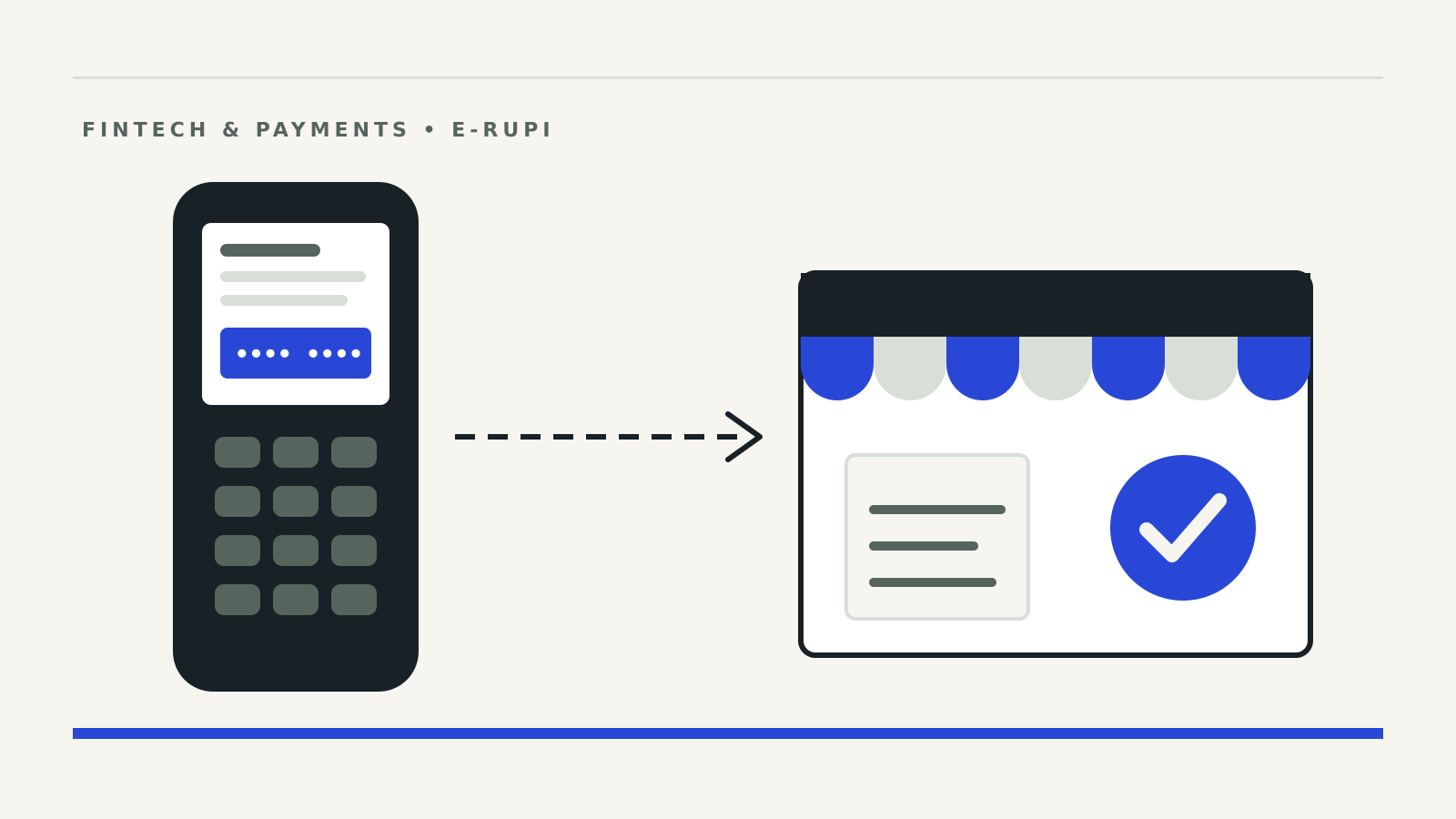
The Positive Pay System is a check your bank runs on a high-value cheque before paying it: you tell the bank the cheque number, date, amount and payee name when you issue it, and the bank matches those details against the cheque image that arrives in clearing. The RBI requires banks to offer it for cheques of ₹50,000 and above. Whether it is compulsory, though, depends on your bank, and the bank pages we checked on 4 November 2026 set that line anywhere from ₹50,000 to ₹20 lakh.
That spread is the practical problem. A ₹3 lakh cheque that goes through without trouble from one bank can be returned unpaid from another because the drawer did not register it.
What the RBI actually requires
The rule comes from the RBI circular “Positive Pay System for Cheque Truncation System” (DPSS.CO.RPPD.No.309/04.07.005/2020-21) dated 25 September 2020. It does four things:
- the National Payments Corporation of India builds the Positive Pay facility into the Cheque Truncation System (CTS);
- banks must enable it for all account holders issuing cheques of ₹50,000 and above, while using it stays at the account holder’s discretion;
- banks “may consider making it mandatory” for cheques of ₹5,00,000 and above; and
- only cheques that comply are accepted under the dispute resolution mechanism at the CTS grids.
It took effect on 1 January 2021. The ₹5 lakh figure is a suggestion to banks, not a national rule, which is why the mandatory thresholds below differ.
Bank-wise: where Positive Pay becomes mandatory
| Bank | Optional from | Mandatory for | Effective date given by the bank | Channels listed by the bank |
|---|---|---|---|---|
| Bank of Maharashtra | ₹50,000 | ₹50,000 and above for individuals; ₹5 lakh and above for corporate customers | 17 February 2022 | Internet banking, branch |
| Union Bank of India | ₹50,000 | ₹2 lakh and above | 1 January 2023 | Internet banking (including bulk upload), branch, SMS, mobile banking, website, WhatsApp |
| Central Bank of India | ₹50,000 | CTS clearing: ₹5 lakh and above. Cash or transfer at the bank by someone other than the account holder: ₹2 lakh (savings) or ₹5 lakh (current, CC, OD) | Revised limits from 7 January 2026 | Any branch, Cent eeZ app, WhatsApp, SMS, internet banking |
| Punjab National Bank | ₹50,000 | ₹5 lakh and above, in clearing, transfer and cash (other than self-drawn) | Clearing from 5 April 2023; all modes from 2 June 2025 | Branch, internet banking, PNB ONE, SMS, website, WhatsApp |
| Bank of Baroda | ₹50,000 | ₹5 lakh and above in clearing | 23 January 2023 | bobWorld app and internet banking, branch, SMS, call centre, WhatsApp |
| Axis Bank | ₹50,000 | ₹5 lakh and above in CTS clearing | 1 September 2021 | Branch, mobile and internet banking, SMS |
| Canara Bank | ₹50,000 | ₹20 lakh and above in CTS clearing | Stepped down from ₹1 crore (1 September 2025) and ₹25 lakh (1 November 2025) to ₹20 lakh, listed for 24 April 2026 | Branch, ai1 mobile app, internet banking, call centre 1800 1030 (individuals) |
| State Bank of India | Any amount you choose when registering | The bank says it is “planning” to make it mandatory at ₹5 lakh (savings) and ₹10 lakh (current, CC, OD); until then, cheques at or above the limit you register | Page last updated 2 December 2025 | Branch, internet banking, YONO, YonoLite, SBI Quick (SMS) |
| HDFC Bank | ₹50,000 | Not mandatory: the bank calls it “an additional risk mitigation measure” | — | NetBanking, registered email |
SBI works differently from the rest. You first register the account for Positive Pay and pick an account-level limit, and from then on every cheque at or above that limit must be lodged. The bank’s page says cheques returned for missing Positive Pay details under its mandatory clause will not attract return charges. Canara’s notice says the opposite for its own customers: a cheque not registered is “liable for dishonour and the applicable charges will be levied”.
A worked example: one ₹3 lakh cheque, nine banks
Say you write a ₹3,00,000 cheque from your savings account to a contractor, who deposits it in his own bank so that it goes through CTS clearing.
- Must be registered, or it can be returned: Bank of Maharashtra (above its ₹50,000 line for individuals) and Union Bank of India (above ₹2 lakh).
- Optional, but worth doing: PNB, Bank of Baroda, Axis Bank and Central Bank of India (all ₹5 lakh in clearing), Canara Bank (₹20 lakh) and HDFC Bank.
- Depends on you: SBI, if you registered the account with a limit of ₹3 lakh or less.
Change one detail and the answer changes. If the contractor encashes the same cheque at a Central Bank of India branch instead of depositing it elsewhere, the bank’s 7 January 2026 limits apply: a savings-account cheque of ₹2 lakh or more presented by someone other than the account holder needs Positive Pay.
“Optional” is not the same as pointless. Under paragraph 4 of the RBI circular, only cheques that comply with Positive Pay are accepted under the CTS dispute resolution mechanism, so a tampered ₹3 lakh cheque you never registered is harder to contest.
When to submit, now that cheques clear the same day
Most bank pages were written when cheques cleared in batches, and their timing advice shows it. PNB asks for the details one working day before the cheque is presented; HDFC says at least 24 working hours before; Bank of Baroda and Union Bank say confirmations received by 6 pm go to the next clearing session.
Clearing is faster now. The RBI circular “Introduction of Continuous Clearing and Settlement on Realisation in Cheque Truncation System” dated 13 August 2025 moved CTS to continuous clearing, and Phase 1 started on 4 October 2025. The RBI’s circular of 24 December 2025 postponed Phase 2, which would have given the paying bank only three hours to respond, “until further notice”, and set the presentation session at 9 am to 3 pm and the confirmation session at 9 am to 7 pm. A cheque handed over in the morning can therefore be presented and confirmed by the evening. The safe habit is the one Canara Bank states plainly: submit the details immediately when you issue the cheque, before it leaves your hands.
Mistakes the bank cannot fix for you
- No edits. Bank of Baroda, Union Bank, Bank of Maharashtra and Canara Bank all say a submitted record cannot be modified or deleted, because it has gone to NPCI’s system. If you entered the wrong amount, Bank of Baroda’s advice is that you can still stop payment of the cheque before it is presented, and then issue a fresh one.
- Payee name as written. HDFC asks for the payee name “in the exact same manner as it has been captured on cheque issued”, and the cheque is matched on those details.
- Old cheques. Bank of Baroda, Union Bank, Bank of Maharashtra and Canara Bank do not accept a confirmation for a cheque more than three months old from the date of confirmation. Post-dated cheques are accepted.
- Funds still matter. A matched cheque is still returned if the balance or signature is not in order.
Axis Bank adds one safety valve: if you forget to register a cheque of ₹5 lakh or more, it may contact you by SMS alert or IVR call, and your instruction within the cut-off time lets the cheque be paid.