A little-read MeitY AI advisory still shapes what users see in AI tools. On 15 March 2024 the Ministry of Electronics and Information Technology told intermediaries and platforms that under-tested or unreliable AI models should reach users in India only with a label warning that their output may be wrong, and that synthetic media which could pass as real should carry a label or permanent metadata. Those two ideas, a warning on the tool and a mark on the output, run through India’s later rules on deepfakes.
This guide reads the advisory itself, the December 2023 advisory it builds on, and what has changed since.
Where it started: the December 2023 advisory
The March text opens by saying it applies “in addition to” an advisory of 26 December 2023, so that earlier document comes first.
The December 2023 advisory, No. 2(4)/2023-CyberLaws-2, dealt with due diligence and grievance handling under the Information Technology (Intermediary Guidelines and Digital Media Ethics Code) Rules, 2021. It told platforms to communicate the content barred under rule 3(1)(b) “in clear and precise language”, at first registration and as reminders at every login and upload; to make users aware of the penal provisions that such content could attract; and to “identify and remove misinformation” and impersonation, “including those created using deepfakes”. Every grievance, including in-app reports, was to get a ticket number. Platforms were asked to file an action taken-cum-status report within a week.
It also spelt out the stakes. Failure to observe due diligence, the advisory said, would cost the intermediary its exemption from liability under section 79(1) of the IT Act, in line with section 79(2) of that Act. PIB’s release of 26 December 2023 described the advisory as aimed at “misinformation powered by AI – Deepfakes”.
What the 15 March 2024 advisory says
The advisory of 15 March 2024, eNo.2(4)/2023-CyberLaws-3, was issued “in supersession of” an advisory under the same number dated 1 March 2024. Addressed to “intermediaries and platforms”, it asks each of them to ensure four things:
- No unlawful content through AI. Use of “Artificial Intelligence model(s) /LLM/Generative AI, software(s) or algorithm(s)” on a platform should not let users host or share content barred by rule 3(1)(b), or break the IT Act or other laws.
- No bias, no election harm. The platform, on its own or through AI, should not “permit any bias or discrimination or threaten the integrity of the electoral process”.
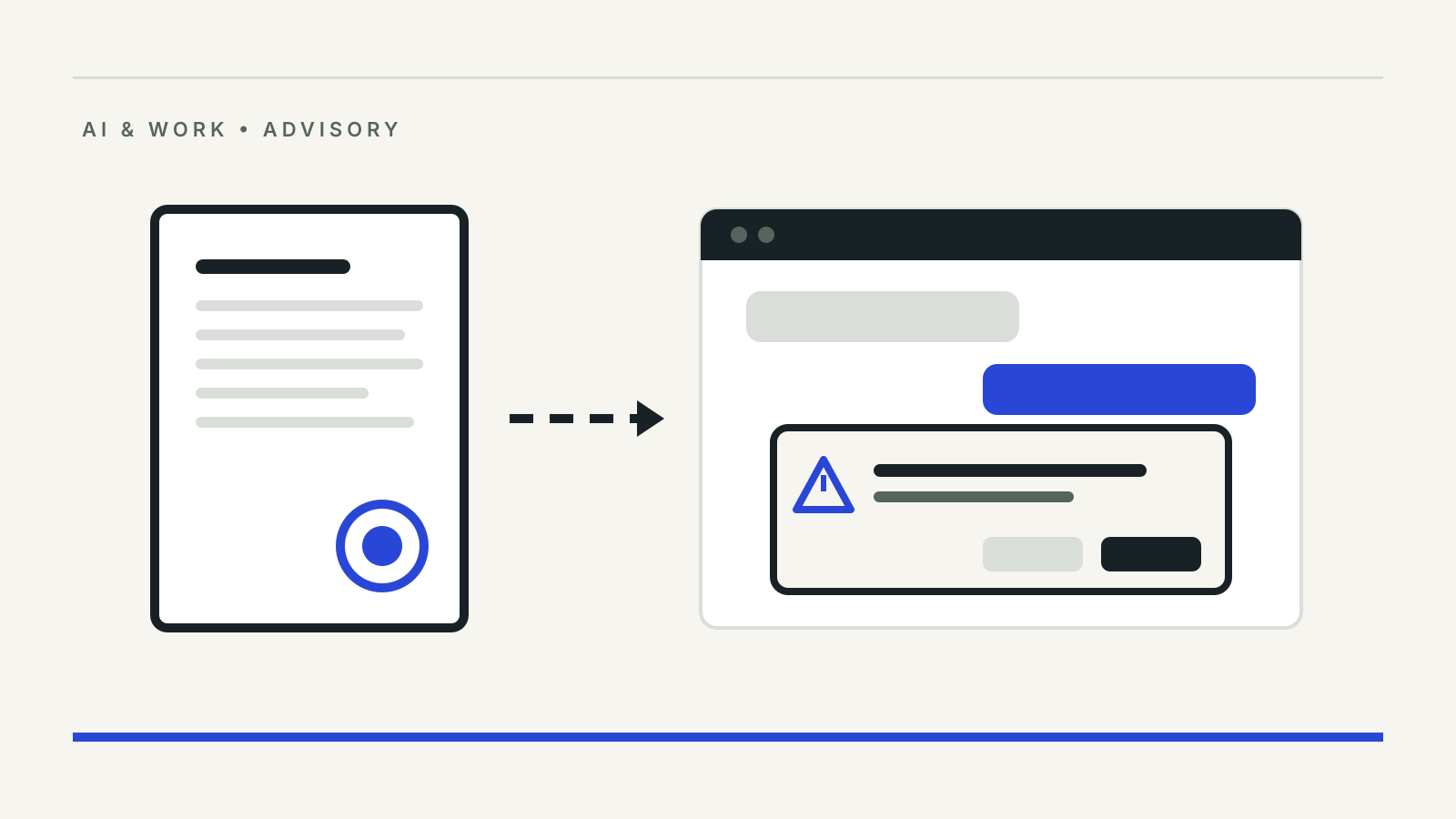
- Label the unreliable. “Under-tested/unreliable” AI models, or further development on them, should be made available to users in India “only after appropriately labeling the possible inherent fallibility or unreliability of the output generated”. A “consent popup” or similar mechanism “may be used” to tell users so explicitly.
- Spell out consequences. Terms of service and user agreements should tell users what happens if they deal in unlawful information, from removal of content and suspension of accounts to punishment under law.
A separate paragraph covers synthetic media. Where a platform’s software lets users create or modify text, audio, images or video “in such a manner that such information may be used potentially as misinformation or deepfake”, that content should be labelled or embedded “with permanent unique metadata or identifier” showing it was made with the platform’s computer resource. If a user later changes it, the metadata should allow identification of that user or resource.
The advisory closes by reiterating that non-compliance with the IT Act or IT Rules “could result in consequences including but not limited to prosecution”, and asks intermediaries to comply “with immediate effect”. The March text does not repeat the December advisory’s one-week reporting request.
What it meant in practice
The advisory does not name any product, and it uses the language of advice: platforms “should ensure” and are “advised”. Its practical footprint is still visible. When an AI assistant on an Indian service carries a note that answers may be inaccurate, or asks you to accept a notice before first use, that is the kind of label and consent mechanism the third point describes.
For workplaces, the more lasting part was the synthetic-media paragraph. It moved the conversation from removing deepfakes after a complaint to marking AI-made media at the point of creation, which is where the binding rules later landed.
From advisory to rules
Labelling stopped being only advice in 2026. The IT (Intermediary Guidelines and Digital Media Ethics Code) Amendment Rules, 2026, G.S.R. 120(E), came into force on 20 February 2026 and wrote a duty to label synthetically generated audio, images and video, with embedded metadata where technically feasible, into the rules themselves. Our guide to deepfake labelling under the IT Rules covers what counts as synthetic, what platforms must block and the shorter takedown deadlines.
MeitY has also consulted on making its advisories carry more weight. A notice dated 21 April 2026 describes draft amendments, first published on 30 March 2026, “in relation to strengthening intermediary compliance with clarifications, advisories and directions issued by the Ministry”, with comments invited until 7 May 2026. A draft has no legal force until final rules are notified, so check MeitY’s site for the current position.
The wider policy picture is set out in our explainer on India’s AI governance guidelines.
Questions
Did MeitY’s 2024 advisory require government approval for AI models?
Not in the 15 March 2024 text, which MeitY publishes. It asks for under-tested or unreliable models to carry a label about possible unreliability and suggests a consent pop-up. It superseded an advisory of 1 March 2024 issued under the same number.
Who did the advisory apply to?
It is addressed to “intermediaries and platforms” and speaks of AI models, large language models, generative AI, software and algorithms used on or through their computer resources.
Is AI labelling now a legal requirement in India?
For synthetically generated audio, images and video, yes: the IT Rules amendment in force since 20 February 2026 requires platforms to label such content. The 2024 advisory’s broader suggestion about labelling unreliable models remains advisory language.
Sources
- MeitY: Advisory eNo.2(4)/2023-CyberLaws-3, 15 March 2024
- MeitY: Advisory No. 2(4)/2023-CyberLaws-2, 26 December 2023
- PIB: MeitY issues advisory to all intermediaries to comply with existing IT rules, 26 December 2023
- MeitY: G.S.R. 120(E), IT (Intermediary Guidelines and Digital Media Ethics Code) Amendment Rules, 2026
- MeitY: Notice on draft amendments to the IT Rules, 21 April 2026