DND registration is the one setting every Indian mobile user can change to cut telemarketing calls and promotional SMS, and it takes a single text message to 1909. What it does not do is stop fraud calls, and a DND choice on its own does not punish anyone. That needs a complaint, and the Telecom Regulatory Authority of India (TRAI) rewrote the complaint rules in February 2025.
This guide covers how to register a Do Not Disturb (DND) preference, what each blocking option lets through, how to recognise legitimate commercial calls and messages, and how to file a spam complaint that your operator has to act on.
How DND registration works
TRAI’s rules for commercial calls and SMS are the Telecom Commercial Communications Customer Preference Regulations, 2018 (TCCCPR). Your preference is recorded by your own telecom operator, and every registered business and telemarketer has to check it before calling or texting you.
The Department of Telecommunications’ Sanchar Saathi portal lists the ways to register, change or remove a preference: an SMS to the short code 1909, a call to 1909, the operator’s voice menu, the TRAI DND app, or your operator’s own app or customer care.
The codes are set out in Schedule II of the regulations, as amended on 12 February 2025:
| What you want to block | SMS to 1909 | Or dial (USSD) |
|---|---|---|
| All commercial communication except transactional, service messages with inferred consent and government messages | FULLY BLOCK | *1909*0# |
| Promotional communication only | BLOCK PROMO | *1909*50# |
| Banking, insurance, financial products, credit cards | BLOCK 1 | *1909*1# |
| Real estate | BLOCK 2 | *1909*2# |
| Education | BLOCK 3 | *1909*3# |
| Health | BLOCK 4 | *1909*4# |
| Consumer goods and automobiles | BLOCK 5 | *1909*5# |
| Communication, broadcasting, entertainment, IT | BLOCK 6 | *1909*6# |
| Tourism and leisure | BLOCK 7 | *1909*7# |
| Food and beverages | BLOCK 8 | *1909*8# |
Source: Telecom Commercial Communications Customer Preference (Second Amendment) Regulations, 2025, Schedule II, TRAI, 12 February 2025.
FULLY BLOCK or BLOCK PROMO?
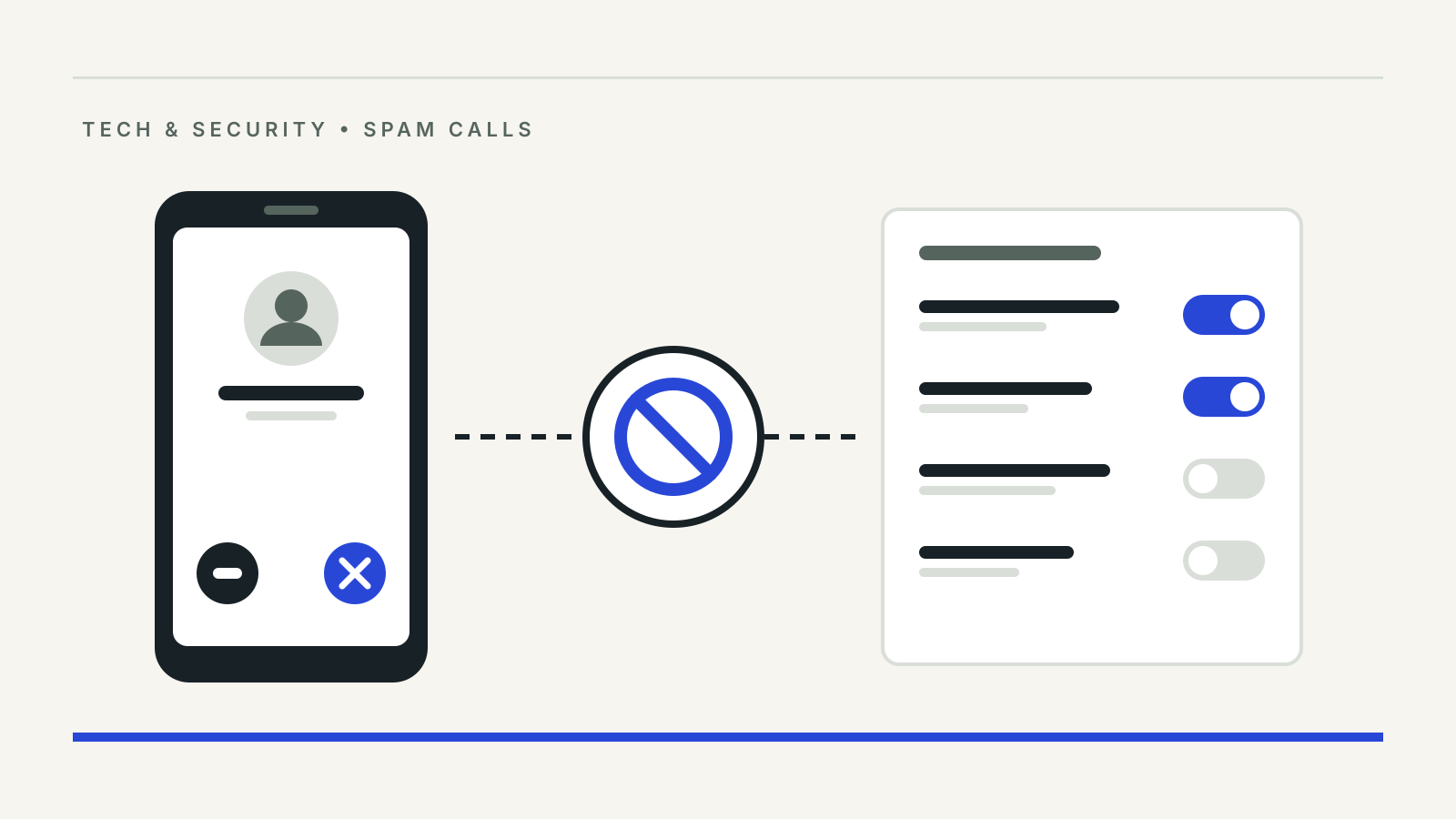
The two broad options differ in one important way. According to the notes to Schedule II, BLOCK PROMO stops only promotional calls and messages, across every category, mode and time. Service and transactional messages and government communication still reach you.
FULLY BLOCK goes further. It also blocks service-type communication that needs your explicit consent, on top of all promotional traffic. Messages that are part of a service you already use, such as balance alerts or delivery updates, are treated as carrying “inferred consent” and still come through, as do transactional and government messages.
For most people, either option ends cold telemarketing. The category codes are for those who want, say, offers from their bank but nothing about property.
Telling a genuine commercial call from a spam call
The 2025 amendments made legitimate commercial traffic easier to recognise. TRAI’s press release of 12 February 2025 says senders may no longer use ordinary 10-digit numbers for telemarketing. Promotional calls come from the 140 number series, and the 1600 series is set aside for transactional and service calls. Our guide to fake customer care number fraud explains why a 1600 number matters when a “bank” calls.
SMS headers now carry a suffix showing the type of message: “-P” for promotional, “-S” for service, “-T” for transactional and “-G” for government, under the amended Schedule II. A sales pitch from a mobile number, or an “offer” with no -P header, is outside the regulated system and worth a complaint.
The amendments also put limits on consent. Consent given to complete a transaction lasts seven days, a business may not ask again for 90 days after you opt out, and promotional messages must carry an option to opt out, according to the TRAI release.
How to file a spam complaint that counts
The complaint is what leads to action, and three changes in the amended regulations make it easier:
- No DND needed for unregistered senders. You can complain about a spam call or SMS from an unregistered telemarketer without first registering a preference. For calls from registered telemarketers, a preference still has to be in place.
- Seven days, not three. A complaint must be made within seven days of receiving the call or message. The regulation says a complaint filed later is recorded as a report instead of a complaint; Sanchar Saathi explains that reports may not lead to action against the sender at first, but help operators find spammers.
- Four details are enough. A complaint is valid if it gives your number, the sender’s number or header, the date, and a short description of the call or message. Operators can ask for more, but the business name and purpose are not mandatory fields.
You can file through the TRAI DND app, an SMS or call to 1909, your operator’s app or website, or the Chakshu facility on Sanchar Saathi. The TRAI DND app reads call logs and SMS only with your permission, according to TRAI’s app privacy policy, and sends a complaint to your operator only when you choose to.
What happens to the sender
The PIB release on the amendments sets out the consequences. Operators must act against unregistered senders within five days, down from 30. Action is triggered by five complaints against a sender in ten days, instead of ten in seven. A first violation bars all outgoing services on the sender’s telecom resources for 15 days; a repeat leads to disconnection across all operators for a year and blacklisting. Calls or messages sent to deceive customers are also treated as spam for this purpose, so their numbers can be cut off quickly.
Operators themselves face financial disincentives of ₹2 lakh, ₹5 lakh and then ₹10 lakh per instance if they misreport spam complaint counts, according to the TRAI release.
When it is fraud, not spam
DND and 1909 deal with unwanted marketing. A call that impersonates a bank, the police or a courier, or asks for an OTP, is suspected fraud and goes to Chakshu instead; our guide to Chakshu and Sanchar Saathi shows how. If money has already left your account, report it at once on the 1930 helpline or cybercrime.gov.in, as explained in our guide to the cyber fraud complaint process.
Questions
How do I activate DND on my number?
Send FULLY BLOCK or BLOCK PROMO by SMS to 1909, dial *1909*0# or *1909*50#, call 1909, or use the TRAI DND app or your operator’s app.
Will DND stop OTPs and bank alerts?
No. Transactional messages, service messages linked to services you use, and government messages are not blocked by FULLY BLOCK or BLOCK PROMO.
How long do I have to complain about a spam call?
Seven days from the call or message. A later complaint is recorded only as a report.
Can I complain without registering DND?
Yes, if the caller or sender is not a registered telemarketer. For registered senders, you need a preference in place.
Sources
- TRAI: Telecom Commercial Communications Customer Preference (Second Amendment) Regulations, 2025, 12 February 2025
- TRAI: Press Release No. 11/2025, TRAI strengthens consumer protection with amendments to TCCCPR, 2018, 12 February 2025
- Press Information Bureau: TRAI strengthens consumer protection with amendments to TCCCPR, 2018, 12 February 2025
- Department of Telecommunications: Sanchar Saathi, questions on commercial communication preferences and complaints
- TRAI: Privacy policy for TRAI mobile apps, including TRAI DND