Chakshu and Sanchar Saathi are the Department of Telecommunications’ tools for the telephone end of fraud: the suspicious call or SMS, the SIM card someone took out in your name, and the phone that was stolen from your bag. They do not recover money. If you have already lost money, the route is the 1930 helpline and cybercrime.gov.in, which the Sanchar Saathi portal itself points to.
That division matters, because people often report in the wrong place. Below is what each facility does, how to use it and what happens after you file.
What Sanchar Saathi is
Sanchar Saathi is a DoT initiative for mobile subscribers, available as a web portal at sancharsaathi.gov.in and as an app on the Google Play Store and Apple App Store. Its citizen services, as listed on the portal, are:
- Chakshu, for reporting suspected fraud communication and unsolicited commercial calls or SMS
- blocking and tracing a lost or stolen handset
- checking the mobile connections issued in your name
- checking whether a handset is genuine from its IMEI number
- reporting an international call that shows an Indian +91 number
- looking up wireline internet providers, and Trusted Contact Details, a directory of official numbers, email IDs and websites supplied by banks and financial institutions
Chakshu was added on 4 March 2024, when the communications minister launched it together with the Digital Intelligence Platform, a back-end system the DoT uses to share information with telecom operators, police, banks and other bodies, according to the Press Information Bureau release of that day.
Chakshu: report the call before you lose money
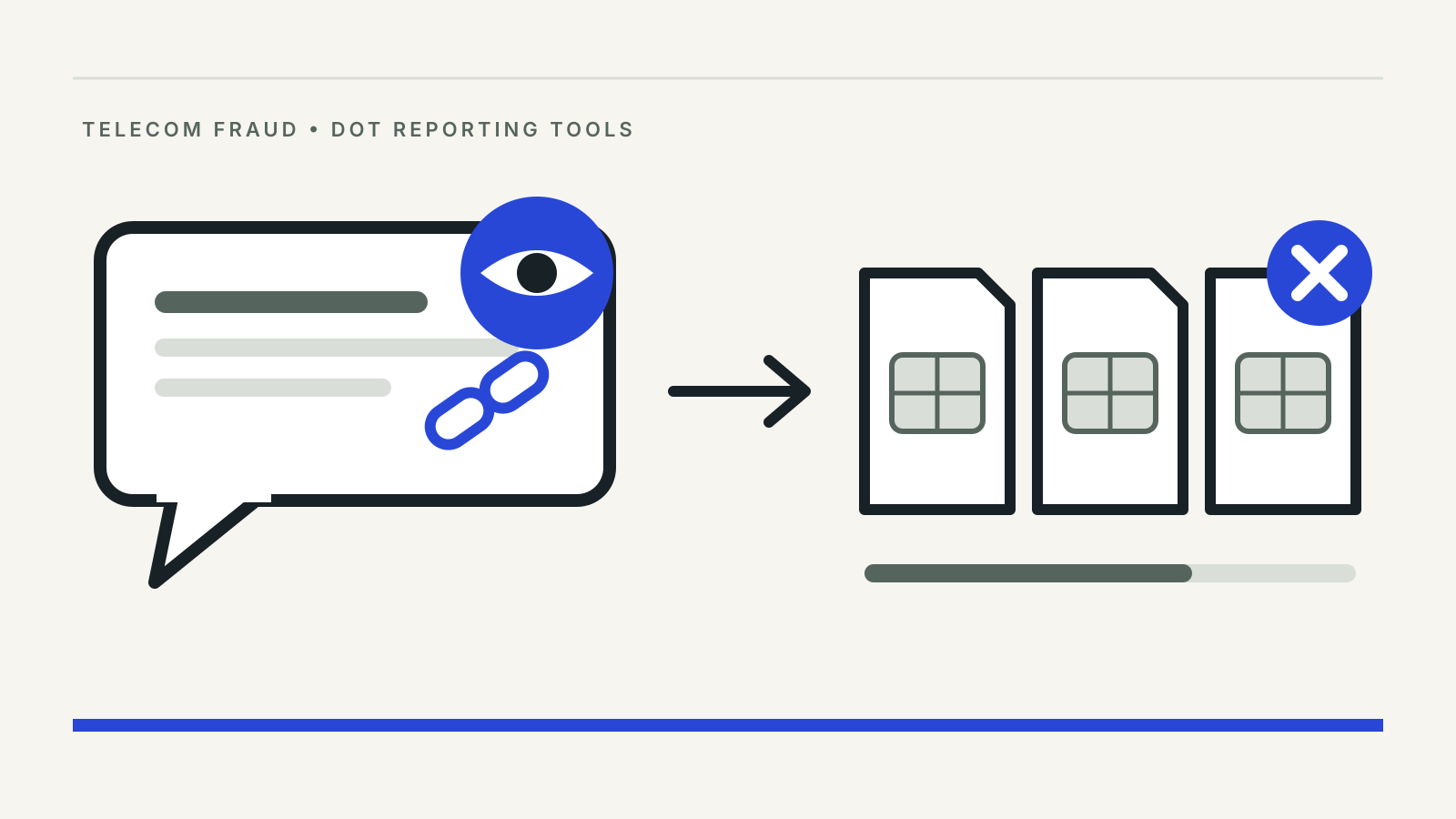
Chakshu takes reports of calls, SMS and WhatsApp messages or calls that look designed to cheat telecom users, where the sender’s number is visible. The portal’s own examples include people posing as DoT or TRAI officials, police, CBI, customs, Aadhaar or RBI staff, fake “KYC update” or bill-payment messages from banks and utilities, fake customer-care lines, investment and trading pitches, job, loan and lottery offers, sextortion and suspicious links.
To file a report, open Citizen Centric Services on the portal or app, choose Chakshu, pick the medium and category, describe the communication, optionally attach a screenshot, verify your own number with an OTP and submit.
After verification, the DoT says it may act against the sender under its procedures, which can include re-verifying the subscriber, disconnecting the number and filing police complaints. The portal is careful about expectations: it does not undertake to act on every report, and it may act against people who file non-genuine reports. It says it keeps the reporter’s details confidential.
The portal is explicit on one point: Chakshu is not a facility for financial fraud or cyber-crime cases. Someone who has already paid should call 1930 and file at cybercrime.gov.in. Our guide to the 1930 helpline covers that step, and our explainer on digital arrest scams covers one of the impersonation patterns Chakshu lists.
Spam is a separate complaint
Chakshu also takes complaints about unsolicited commercial communication, the marketing calls and SMS you did not consent to. These are handled under TRAI’s Telecom Commercial Communications Customer Preference Regulations, 2018, and the complaint is passed to your telecom operator.
Timing matters here. A complaint made within seven days of receiving the call or SMS is treated as a valid complaint that operators investigate; one filed later is recorded only as a report that may help identify the sender later. Besides Chakshu, you can complain by calling or texting 1909, through the TRAI DND app or through your operator, and you can use the same channels to block commercial messages by category. Status is tracked on your operator’s own complaint page.
Messages from the Central or State Government and constitutional bodies in the public interest are not spam under these rules.
Lost or stolen phone
The blocking service stops a handset from working on every Indian operator’s network and creates a trace if someone tries to use it. The portal lists the steps:
- File a police report and keep a copy.
- Get a duplicate SIM for your lost number from your operator, because the OTP for the request goes to that number.
- Keep an identity proof ready; the purchase invoice is optional.
- Submit the blocking form on the portal or app and keep the Request ID.
The DoT says a reported handset is blocked within 24 hours. If the phone is later traced, you get an SMS and the trace report goes to the police station where you filed. Once you recover the phone, tell the police it has been found and then unblock it on the portal with your Request ID. If the block was registered through the state police, the unblocking also goes through them.
On 14 October 2026 the portal’s dashboard showed 61.66 lakh handsets blocked, 38.22 lakh traced and 14.24 lakh recovered across India, as cumulative totals.
Connections in your name
A SIM taken in your name by someone else can be used for fraud that leads back to you. The “Know Mobile Connections in Your Name” service lets you log in with an OTP, see every mobile connection issued against your identity and mark any as “This is not my number” or “Not required”.
Flagged numbers go to the operator for re-verification. According to the portal’s timelines, outgoing services on a flagged number are suspended within 30 days, incoming within 45 days and the connection is disconnected within 60 days if re-verification fails, with an extra 30 days for subscribers on international roaming, in hospital or with a disability. A flagged number cannot be ported until re-verification is complete.
The portal also states the ceiling: an individual can hold at most nine mobile connections across all operators, or six in Jammu and Kashmir, Assam and the North Eastern states.
Before you buy a phone, and when +91 is not local
To check a handset, dial *#06# to see its IMEI, then enter it on the portal or send “KYM” followed by the 15-digit IMEI by SMS to 14422. The reply gives the brand, model and manufacturer; a mismatch is a reason not to buy.
If a call shows an Indian +91 number but comes from abroad, it may be routed through an illegal exchange that disguises international calls as local ones. Report it on the portal, in the app, or by calling 1963 or 1800110420.
What to use, in one list
- Suspicious call, SMS or WhatsApp, no money lost: Chakshu
- Unwanted marketing call or SMS: Chakshu or 1909, within seven days
- Money already lost: 1930 and cybercrime.gov.in, plus your bank
- Lost or stolen phone: police report, then the block request
- Unknown SIM in your name: Know Mobile Connections in Your Name
- Not sure a bank’s number is real: Trusted Contact Details
Lending apps need the same caution: our guide to RBI-approved loan apps explains how to check a lender before you share anything.