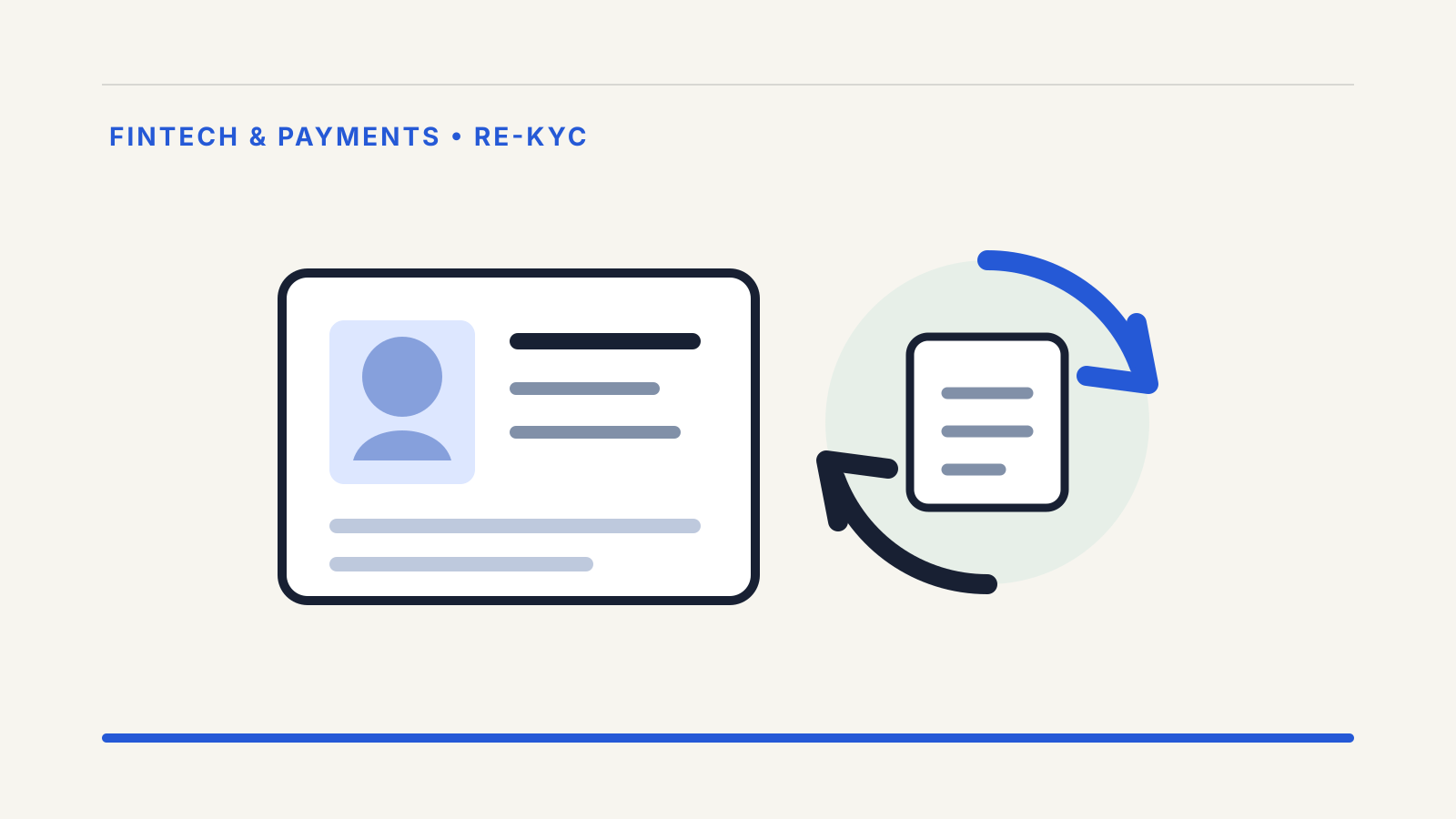
Re-KYC and CKYC are related, but they solve different problems. Re-KYC is the periodic update a bank or another RBI-regulated entity makes to keep your customer record current. CKYC is the central registry that lets regulated entities retrieve an existing KYC record, with your consent, instead of asking for the same documents again.
That distinction matters when a bank sends a KYC reminder. A genuine reminder does not automatically mean you must visit the home branch with a full folder of papers. What the bank needs depends on whether your details changed, how your account is risk-classified and whether its existing CKYCR record is current.
Rules checked against RBI material available on 24 October 2026.
How often can re-KYC fall due?
The Reserve Bank of India’s KYC FAQs, updated on 9 June 2025, set the minimum periodicity by customer risk:
| Customer risk category | Minimum periodic update |
|---|---|
| High risk | At least once every 2 years |
| Medium risk | At least once every 8 years |
| Low risk | At least once every 10 years |
The period runs from account opening or the last KYC update. The bank assigns the risk category under its internal KYC policy; it is not a label a customer chooses. The same FAQ says a regulated entity may apply additional measures under that policy, including more frequent updates or a request for physical presence where justified.
A June 2025 relaxation allowed low-risk individual customers to keep transacting while completing an overdue update within one year of the due date or by 30 June 2026, whichever was later. That was a transitional deadline, not a permanent extra year for every future re-KYC request.
When a self-declaration may be enough
Section 38 of the RBI’s Master Direction on KYC distinguishes three common situations for an individual customer.
Nothing has changed
If the KYC information remains the same, the regulated entity can obtain a self-declaration. The direction lists channels such as the registered email address or mobile number, ATMs, digital banking channels and a letter. A bank may also accept the declaration through an authorised business correspondent.
Use only a channel shown inside the bank’s official app, website, branch or published contact information. A link in an unsolicited message is not proof that the request is genuine.
Only the address changed
A customer can give a self-declaration of the new address through the permitted channels. The bank may then verify it by positive confirmation within two months—for example, through an address-verification letter, contact-point verification or a deliverable. The exact evidence depends on the bank’s approved policy.
Identity details or documents changed
A fuller update may be required when the identity information changed, a document expired, the CKYCR record is incomplete, or the bank needs more information under its KYC policy. Aadhaar OTP e-KYC and video customer identification process (V-CIP) are among the routes RBI permits for periodic updates, subject to the applicable conditions.
Re-KYC can be completed at any branch of the regulated entity where the customer maintains the account; it is not restricted to the branch where the account was opened.
What CKYC changes
CKYC is short for Central KYC Records Registry, or CKYCR. CERSAI operates the registry. When a customer’s KYC record is uploaded, the registry generates a KYC Identifier that regulated entities can use to retrieve the record.
RBI’s 12 June 2025 amendment says the KYC Identifier should be the first reference point when opening an account-based relationship or verifying identity. With the customer’s consent, a regulated entity should download the record from CKYCR rather than demand the same records again, unless:
- the CKYCR record changed or is not current;
- the downloaded record is incomplete;
- the validity period of a document has lapsed;
- the regulated entity considers extra information necessary to verify identity or address, conduct enhanced due diligence or build an appropriate risk profile.
This does not mean every organisation can freely browse your record. Retrieval is for regulated entities and is tied to the KYC process and customer consent.
RBI’s 2025-26 annual material also clarified responsibility: the entity that last uploaded or updated a CKYCR record is responsible for verifying identity or address. Another regulated entity that downloads a current, compliant record need not repeat that verification.
What a genuine bank request should tell you
A useful re-KYC notice should identify the account relationship, say what action is needed and point to an official channel. Under the June 2025 amendment, regulated entities had to send advance notices before the due date and reminders after it, with at least one letter in each set.
Before responding:
- Open the bank’s app yourself or type its published website address.
- Check the secure inbox, profile or KYC section.
- If the request remains unclear, call the number on the bank’s official site or visit a branch.
- Ask whether the bank needs a no-change declaration, an address update or fresh documents.
- Keep the acknowledgement showing when the update was completed.
Do not share an OTP, PIN, card CVV or login password to “complete KYC”. Do not install a remote-access application at a caller’s request. A regulated entity may need information, but it does not need control of your phone.
If the bank asks for documents already in CKYC
Ask whether it found your CKYCR record and whether the issue is an expired, incomplete or changed field. A fresh document request can be legitimate, but the reason should fit one of the permitted circumstances.
If the bank does not resolve a service complaint, first use its internal grievance process. After that route and the applicable waiting period, our guide explains when and how to file an RBI Ombudsman complaint.
The practical rule is simple: verify the request through the bank, find out what changed, and provide only what that update requires. Re-KYC keeps the relationship current; CKYC is meant to reduce needless repetition.
Questions readers ask
Is CKYC the same as re-KYC?
No. CKYC is the central record that a regulated entity can retrieve with consent. Re-KYC is the periodic process of checking and updating a customer’s information.
Must I visit my home branch for re-KYC?
Not in every case. RBI permits no-change and address-only declarations through specified channels, and re-KYC can be completed at any branch of the regulated entity where you hold the account. The bank may still require another route under its approved policy when verification needs it.
Can a bank ask for documents already in CKYC?
Yes, in limited circumstances—for example, when the registry record is incomplete or no longer current, a document has expired, details changed, or extra information is needed for due diligence. Ask the bank to explain which field requires an update.