The digital rupee, written e₹, is India’s central bank digital currency: rupee notes issued by the Reserve Bank of India in digital form and held in a wallet app on your phone. It is legal tender and a liability of the RBI, and it is designed to behave more like cash in a purse than money in a savings account.
Retail e₹ is still a pilot. The RBI’s “Digital Rupee (e₹) – FAQs”, updated as on 1 October 2026, describes the retail and wholesale programmes as limited-scale, controlled roll-outs to test the technology, use cases and acceptance. Retail issuance and use for members of the public has been live since December 2022. In line with the RBI’s website terms, this explainer cites the FAQ by name and date rather than linking to it.
How the money reaches your wallet
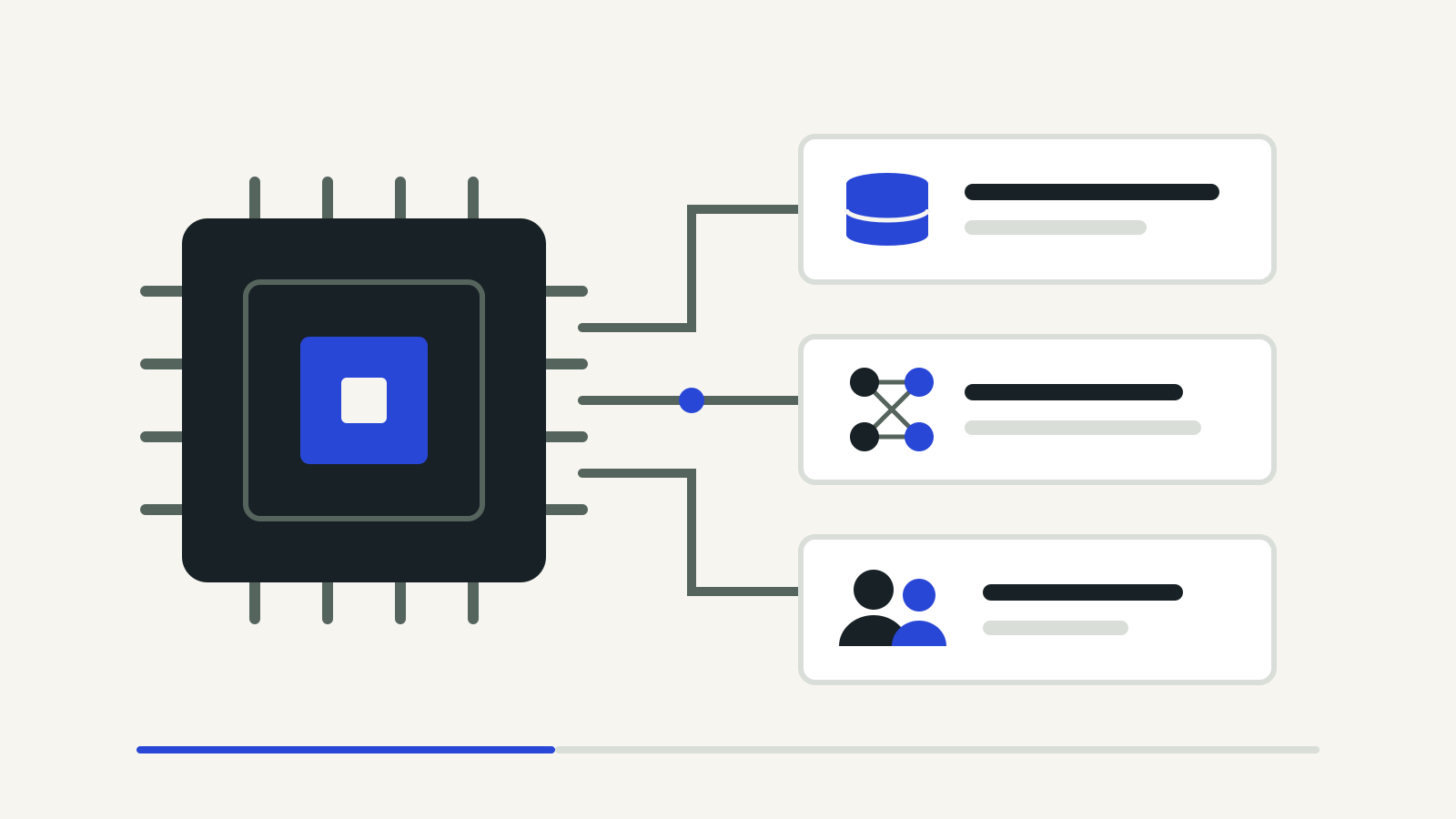
The RBI creates e₹ and issues it electronically to the banks and non-banks taking part in the pilot, much as it issues notes to banks. Those institutions then onboard customers and open wallets on their phones.
For most users the wallet is linked to a savings account, which the RBI says avoids a separate KYC process. You load e₹ from that account, and you can load, redeem or transfer between the account and the wallet at any hour, every day of the week. There is no minimum balance.
The FAQ notes one exception to the savings-account link. Beneficiaries of a Direct Benefit Transfer scheme paid through programmable e₹, and similar corporate use cases, can be onboarded with mobile and/or Aadhaar number authentication, without a savings account.
Notes, change and decimals
A wallet shows e₹ in the same denominations as physical currency. That sounds awkward until you pay: if you have a ₹20 token and buy something for ₹15, you enter ₹15, the merchant receives ₹15 and ₹5 stays in your wallet. Payments can be made to two decimal places.
The RBI says there are no charges or fees for using e₹ or the wallets. There is also no interest on wallet balances, because e₹ is meant to work like cash rather than a deposit.
e₹ and UPI are different things
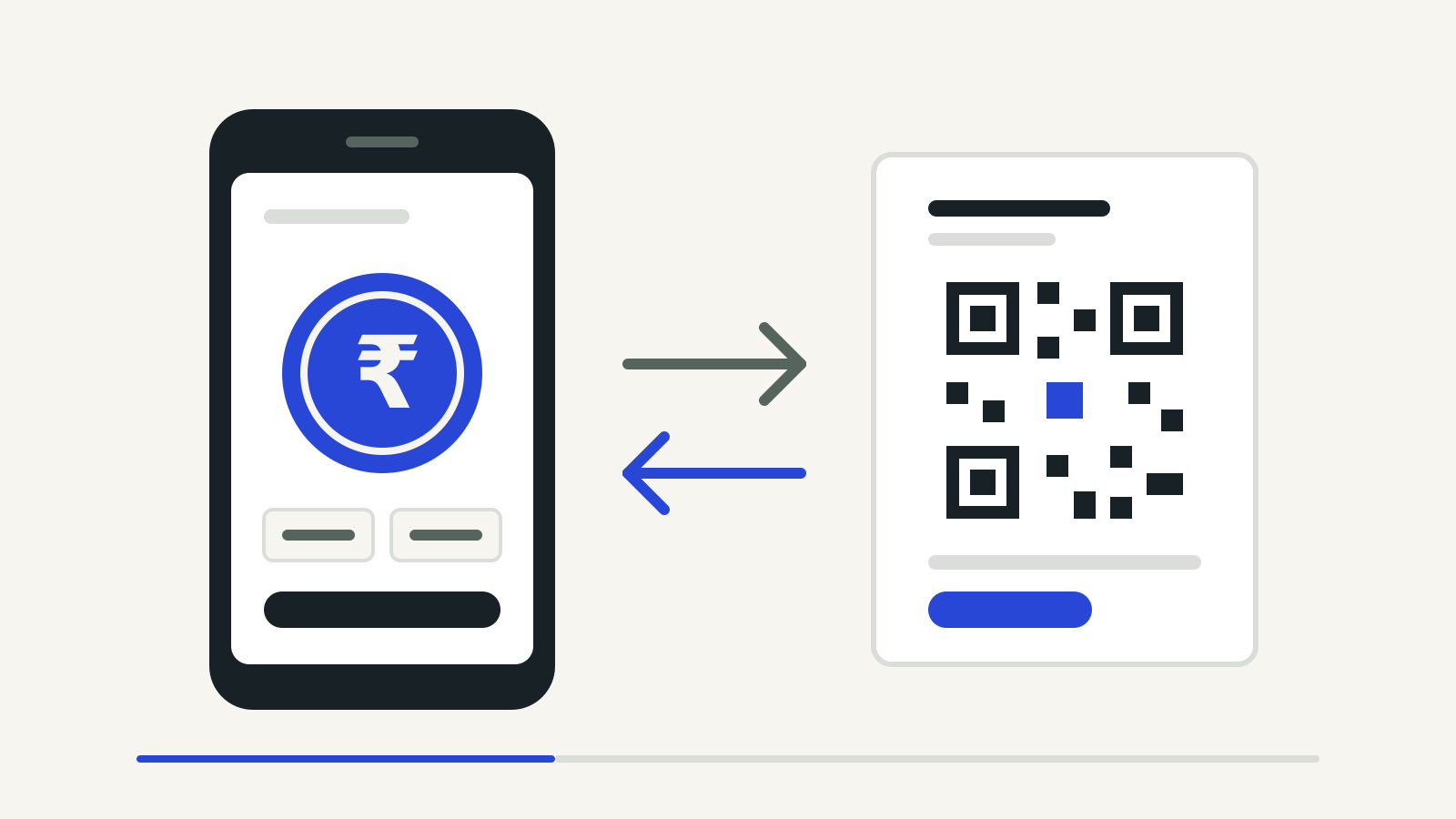
The FAQ puts it simply: e₹ is a digital form of the rupee, while UPI is a means of payment. When you pay with UPI, money moves between bank accounts. With e₹, you can withdraw money from your bank account and keep it in the wallet as a store of value.
The settlement path depends on which QR code you scan:
| You pay by scanning | What happens |
|---|---|
| A CBDC QR code | The payment moves between two e₹ wallets and settles instantly, without passing through either bank account |
| A UPI QR code, from your e₹ app | The payment uses UPI and settles on UPI’s timelines |
The UPI QR option matters for adoption, since most Indian merchants already display one. Our explainer on what happens after you scan a UPI QR code walks through that route.
Which apps offer a wallet
According to the October 2026 FAQ, 19 banks offer CBDC wallets: Axis Bank, Bank of Baroda, Bank of India, Bank of Maharashtra, Canara Bank, Federal Bank, HDFC Bank, ICICI Bank, IDBI Bank, IDFC First Bank, Indian Bank, IndusInd Bank, Karnataka Bank, Kotak Mahindra Bank, Punjab National Bank, SBI, UCO Bank, Union Bank of India and Yes Bank.
Most use a separate “Digital Rupee” app. Two are exceptions in the RBI’s list: Yes Bank’s wallet sits inside its YES PAY Next app, and Kotak’s is reachable from its main mobile banking app as well as a standalone app. The apps run on Android and iOS. Check your own bank’s instructions, since onboarding steps differ by provider.
If you lose your phone
The RBI says e₹ in the wallet stays safe if the phone is lost, and the wallet can be recovered using the same phone number or SIM on a new device. Disputes are raised through the wallet app or the provider’s customer care.
That recovery depends on the phone number, so keep the SIM secured and do not share wallet PINs or OTPs, the same precautions that apply to any payment app.
Programmable e₹
Programmability lets a sponsor, such as a government department or an employer, or a user, restrict how e₹ can be spent. The FAQ lists parameters including an expiry date, geographic location, merchant category codes and merchant VPAs.
Funds issued this way sit in a programmable CBDC wallet, and the app shows whether a balance is general-purpose e₹ or programmable e₹ along with any conditions attached. If a subsidy or allowance arrives with conditions, read them in the app before trying to spend it at a merchant outside the permitted category.
Offline payments are still being tested
The RBI’s aim is to let e₹ work where internet connectivity is weak or absent, mirroring a strength of physical cash. But the October 2026 FAQ says only that different offline solutions are being explored. Do not assume your wallet can pay without a connection unless your provider says it supports that feature.
Wholesale e₹ is a separate track
You may see e₹-W in the news. Wholesale CBDC is for financial institutions settling large-value and inter-bank transactions. The FAQ lists 16 pilot participants and four use cases: settling secondary-market trades in government securities, call money settlement, and tokenised issuance and settlement of certificates of deposit and of corporate bonds. None of this changes how a retail wallet works.
Is it worth trying?
For an ordinary user, e₹ is an optional instrument inside a pilot. It may suit someone who wants to keep a small cash-like balance separate from their bank account, or who receives programmable benefits. It earns no interest, so it is not a place to park savings. Unlike crypto assets, it carries the RBI’s guarantee and is at par with the rupee note.
Sources
Reserve Bank of India, “Digital Rupee (e₹) – FAQs”, updated as on 1 October 2026 (cited by name; the RBI’s website terms restrict direct linking). Consulted on 10 October 2026.